Blog
Buying a refurbished or used enterprise server: a buyer's checklist
Refurbished and used servers are how many estates stretch a hardware budget — a generation-old host at a fraction of its first price, doing work it is still entirely capable of. They are also where vague language costs buyers money. This checklist covers the words, the evidence and the checks that separate a sound second-life purchase from an expensive lesson.
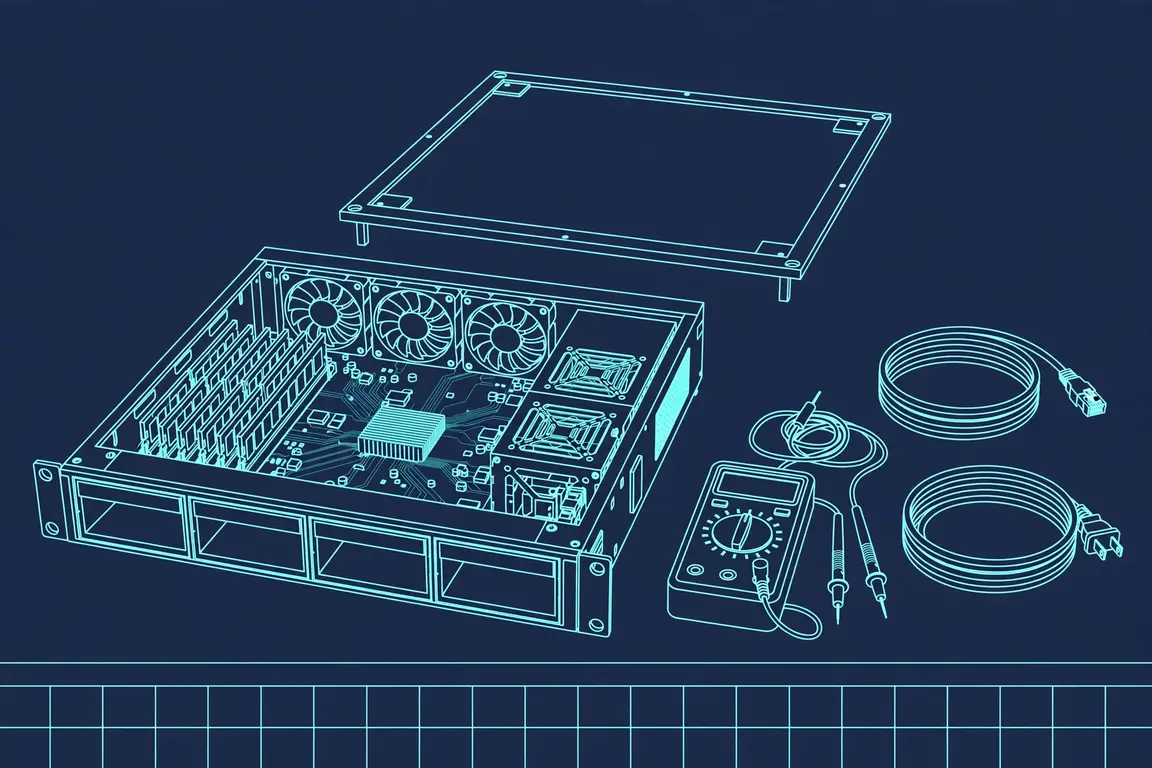
Start with the words: refurbished is not used
The two labels describe different offers and should never blur. Refurbished means the machine has been inspected, tested and brought to a defined working state before it is offered — components checked, faults repaired, firmware and diagnostics run. Used means the machine is offered as it stands: functionally tested at most, with its condition described as found. Neither offer is dishonest; what is dishonest is selling one under the other's name.
On our own refurbished and used page the rule is mechanical: the word appears next to every model named, and a unit's quote repeats it. Apply the same test to any seller. If a listing will not say plainly which of the two it is, the ambiguity is the answer — walk to a seller whose listings commit.
Condition grade belongs in the quote, not the conversation
Verbal condition descriptions evaporate. The grade of the specific unit — cosmetic state, component health, battery and drive wear where measurable — should be written into the quote for that unit, alongside the warranty terms that apply to it. That is why every quote for a second-life unit carries the same line: confirm condition grade and warranty terms with your quote. It makes the quote, not the listing, the document of record.
This matters most at the moment nobody plans for: a fault in month three. The paperwork that settles that conversation is the quote with the grade and terms written on it. If they were only spoken, there is no conversation — there is an argument. Buyers of new hardware can lean on standard warranty machinery; buyers of second-life hardware lean on the quote, so the quote has to carry the weight.
Serial numbers and photos before shipment
Ask for the serial numbers of the actual units and photographs of their condition before anything ships. Serial numbers tie the paperwork to physical machines: they let you check the units against the quote on arrival, register them in your asset system in advance, and prove later which machine a warranty conversation is about. Photographs do the same for cosmetic and configuration reality — the rails fitted, the drive bays populated, the ports undamaged.
A seller who cannot produce serial numbers for the specific units being sold is telling you the units are not yet identified — which means the condition description you were quoted may belong to a different machine. That single check, done before payment, filters out most second-life purchasing disasters.
What testing should you ask about?
For refurbished units, ask what the test cycle covers: power-on diagnostics, memory test duration, drive health reporting, and burn-in under load. The answers do not need to match a laboratory standard; they need to exist, in writing, and to be proportionate to the price. A machine described as fully refurbished should have a fuller answer than a machine sold as tested-and-working, and the price difference between the two should be visible in the answers.
Drives deserve a specific question, because spinning disks and early SSDs carry their hours with them. Ask how drive health is reported — SMART data, percentage-used figures for SSDs — and whether worn drives are replaced during refurbishment or disclosed. In a used, as-found unit, disclosed wear at a fair price is a reasonable bargain. Undisclosed wear is the failure mode the whole checklist exists to prevent.
Configuration checks on second-life hardware
A used server's badge is even less informative than a new one's. Verify the configuration of the actual units: processor model and count, memory size and population, drive models, controller and network options, and the management licence position. Firmware versions matter too — a fleet-standard image assumes a firmware baseline, and second-life units arrive from many prior lives.
Power supplies and rails are the classic omission: check the rating against your racks and the rail kit against your rack standard, because second-life stock has a habit of arriving with whatever rails the previous owner used. All of this belongs in the written configuration the quote carries — the same discipline as a new purchase, applied to machines whose history makes it more necessary, not less.
When used beats new — and when it does not
The honest case for second-life hardware is strong: capacity expansion of an existing generation, lab and staging estates, spares for a fleet whose new equivalent is discontinued, and budget-constrained tiers where a generation-old host outperforms a new smaller machine. Estates that standardise their checks buy refurbished and used hardware for years without drama.
The limits are equally clear. Production roles that need the current platform's efficiency or a full maker's warranty term argue new; roles where a failure stops revenue argue for the warranty position, not the purchase price. The mature estate runs both: new where the duty demands it, refurbished where it does not, and paperwork that never confuses the two. That separation — page by page, quote by quote, label by label — is the whole discipline this checklist describes.
A short note on pricing sanity
Second-life prices should make sense against two anchors: the current price of the equivalent capability bought new, and the price of the same model sold as used, as-found. Refurbished sits between them, and where it sits depends on the depth of the work the label claims — testing, component replacement, and the warranty terms written into the quote. A refurbished price near the new price needs an exceptional justification; a refurbished price below the used market needs an explanation of what was skipped.
Neither check requires market data you do not have: both anchors are one inquiry away, and any desk — including this one — will quote the new equivalent of a refurbished configuration on request. Run the comparison before every second-life purchase. It is the five-minute habit that keeps the refurbished market honest, one buyer at a time.
Questions buyers ask
Is a refurbished server a good first server for a small business?
It can be the smartest purchase a small site makes — provided the grade and warranty terms are written into the quote and the unit's serial numbers are confirmed before shipment.
What is the single most important check?
Identification: serial numbers of the actual units, matched to a quote that states their condition grade. Everything else builds on knowing exactly which machines you are buying.
Price a configuration like this
Send the model name, your target configuration and the delivery destination. We reply with a configuration-matched quote and the checks to run before shipment.