Home · 1U vs 2U rack servers
Comparison
1U vs 2U rack servers
The most common comparison in the rack range. Both shapes carry dual-socket servers; what changes is what fits around the processors. This page works through the trade-off against the models we supply.
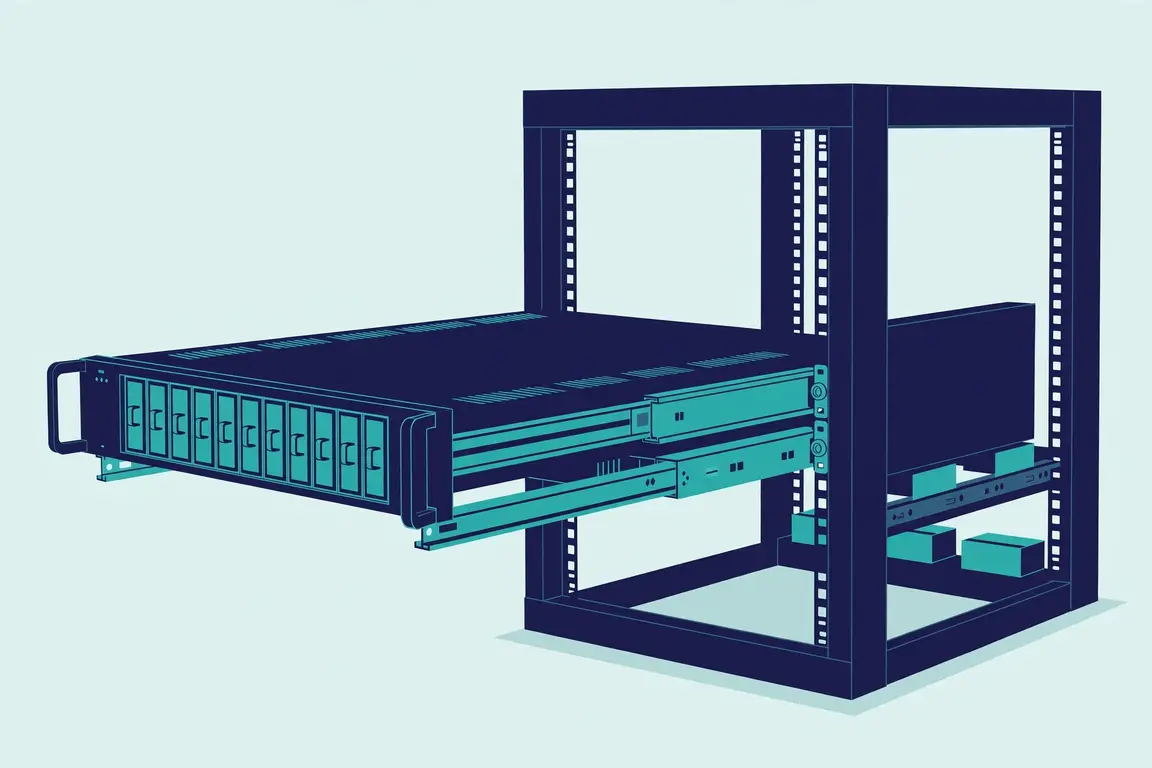
The shape of the trade-off
A 1U server halves the rack space per node. In a full rack that is the difference between twenty nodes and forty, and for stateless, scale-out compute — web tiers, container hosts, render and build fleets — the extra nodes are worth more than any single node's depth. The 1U models in our range (PowerEdge R470 and R6615, ProLiant DL365, ThinkSystem SR530) are built for exactly that tier.
A 2U server spends the extra unit on the three things 1U cannot hold: memory slots (the DL380 Gen11's 32 slots and 8 TB ceiling), drive bays (up to 36 NVMe in its second listing, 32 in the R960's class above it) and full-height expansion. Virtualisation hosts, database servers and GPU carriers live here because their configurations do not fit in 1U.
Cost per what?
1U wins on cost per node and loses on cost per gigabyte of memory or terabyte of local storage. The honest comparison is per workload: price the virtualisation estate both ways and the 2U host's memory depth usually pays for its rack space; price the web tier both ways and 1U runs away with it. Both quotes come from the same desk here, in the same format.
The deciding questions
- How much memory must each node carry? Above the 1U ceiling, the question answers itself.
- How many local drives? NVMe-heavy and capacity-heavy nodes are 2U machines.
- Any accelerators? GPU carriers are 2U and above.
- Is the tier stateless? Stateless scale-out is 1U's home ground.
The third option, briefly
Estates that outgrow the 1U/2U argument sometimes leave it sideways, into multi-node and blade chassis that pack several servers into 2U of shared infrastructure. The blade pages of this catalogue cover that shape in our range. The trade is commitment: density and shared management against a chassis standard the estate must live with for years. For most estates the honest answer remains the two classic heights, mixed by tier — which is why this comparison, and not the exotic option, is the one buyers return to.
Power and cost per rack, briefly
The comparison has a facilities shadow: forty 1U nodes and twenty 2U nodes do not draw the same power or make the same heat, and the room's per-rack budget may quietly cap the 1U fleet below its theoretical density. Price that in. A density plan the room cannot feed is not a density plan, and the estate that checks the rack budget before choosing its height saves itself the particular misery of servers that cannot all be switched on.
The short answer
If the tier is stateless and numerous, buy 1U and spend the savings on node count. If the node carries memory, drives or accelerators, buy 2U and spend the rack space without resentment. Every estate of any size ends up owning both heights; the comparison exists to make sure each tier is bought in the right one, on purpose, with the numbers written down.
Questions buyers ask
Can I mix 1U and 2U in one estate?
Almost every estate does — 1U for the scale-out tier, 2U for data-carrying hosts. They are quoted together.
Is 2U being replaced by denser shapes?
Blade and multi-node chassis chase the same density from the other direction; the blade page covers that shape in our range.
Price a configuration like this
Send the model name, your target configuration and the delivery destination. We reply with a configuration-matched quote and the checks to run before shipment.