Home · SAN vs DAS storage
Comparison
SAN vs DAS storage
The storage layout decision in one comparison: attach the array to a fabric and share it (SAN), or attach it to the hosts it serves (DAS). Our storage range covers both — the PowerVault MD2460 is published for SAN/DAS use, and the ME-class and Unity XT lines serve shared estates.
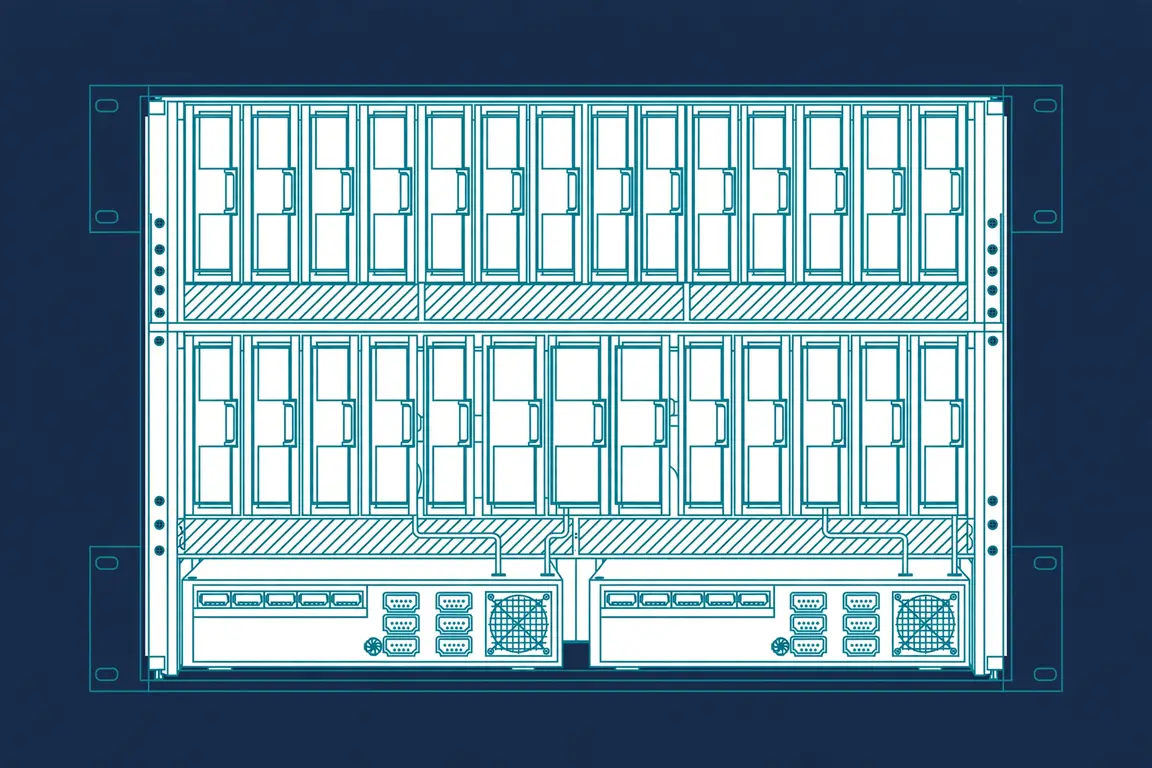
What actually differs
DAS is a cable: the array belongs to the hosts it is plugged into. It is simple, fast and cheap per terabyte, and its limits are the host count and the blast radius — the storage serves those hosts and no others. SAN puts the array on a storage network, so any host on the fabric can reach any pool; capacity grows by adding arrays, hosts grow without touching storage, and the failure of one host does not strand its data.
The cost of that flexibility is the fabric itself and the skill to run it. Below a handful of hosts, DAS's simplicity usually wins. Past that, estates drift to SAN because the alternative — stranded capacity behind individual hosts — wastes more than the fabric costs.
Where hybrid flash fits
Hybrid flash is orthogonal to the layout choice: it tiers data inside the array, whichever way the array attaches. The Unity XT hybrid flash line in our range is a SAN-class system; DAS arrays in our range tier with their drive mix. Choose the layout first, then the media.
The deciding questions
- How many hosts must reach the same data? One or two: DAS is live. Many: SAN.
- Does storage grow on its own schedule, or locked to host purchases? Independent growth argues SAN.
- What happens when a host fails? If its data must be reachable elsewhere within the hour, that is a SAN answer.
Costing the two layouts honestly
Compare totals, not components. DAS wins the component comparison almost every time — no fabric, no additional adapters, fewer licences of everything. The honest SAN column includes the fabric and the skills; the honest DAS column includes the stranded capacity — the terabytes bought for one host that sit idle while another host starves — and the migration that eventually reunites them. Estates that have run both know the stranded-capacity line is real money wearing an invisibility cloak.
Time horizon decides the winner more often than scale does. A stable pairing with a three-year horizon is DAS country. An estate that expects to reorganise its hosts within the storage's life should buy the layout that survives reorganisation. State the horizon in the inquiry and the quote will follow it.
The migration question
Estates outgrow layouts, so ask at purchase how each option leaves. DAS estates migrate by forklift — data copied host to host during a window. SAN estates migrate by accretion — new arrays join the fabric, data moves online, old arrays leave. Neither answer disqualifies its layout; both belong in the record, because the layout chosen today is the migration somebody runs in five years, and they will thank or curse the person who wrote the reasoning down.
Questions buyers ask
Can an estate run both?
Yes — DAS for the fixed pairs, SAN for the shared estate is a common and sensible split.
Do you quote the fabric with the array?
Our range is servers and storage; name the fabric you run and the array configuration is checked against it on the quote.
Price a configuration like this
Send the model name, your target configuration and the delivery destination. We reply with a configuration-matched quote and the checks to run before shipment.